
Rare NRG1 Fusion Market Size in the 7MM is projected to increase over the forecast period of 2024-2034 | DelveInsight
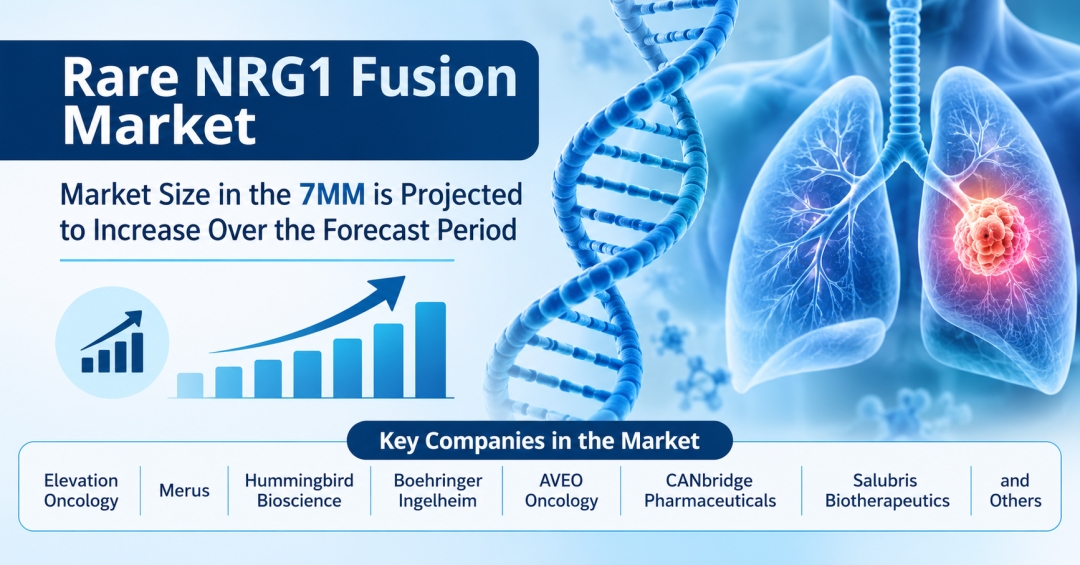
(Albany, US), November 04, 2026 – DelveInsight’s ‘Rare NRG1 Fusion Market Insights, Epidemiology, and Market Forecast – 2034’ report delivers an in-depth understanding of Rare NRG1 Fusion, historical and forecasted epidemiology, as well as the Rare NRG1 Fusion market trends in the United States, EU4 (Germany, Spain, Italy, and France) and the United Kingdom, and Japan.
Explore the intricate details of the Rare NRG1 Fusion Market Report @ Rare NRG1 Fusion Market Size
Key Takeaways from the Rare NRG1 Fusion Market Report
-
The total market size of the rare NRG1 fusion market in the 7MM was approximately USD 37 million in 2023 and is projected to increase during the forecast period (2024–2034).
-
The total market size of NRG1 fusion in the United States was approximately USD 22 million in 2023 and is projected to increase during the forecast period (2024–2034).
-
Among EU4 countries, Germany accounted for the maximum market size in 2023, while Spain occupied the bottom of the ladder.
-
By therapies, the highest revenue was generated by current/off-label therapies in the United States in 2023.
-
The total number of incident cases of Rare NRG1 Fusion in the 7MM was around 5,800 in 2023.
-
NRG1 gene fusions are rare across different types of cancer, with a reported incidence of ~0.2% across solid tumors, with the notable exception of IMA, which represents ~2%–10% of lung adenocarcinomas.
-
There are currently no approved targeted therapies for NRG1 fusions. Standard therapy for advanced tumors harboring NRG1 fusions remains chemotherapy and/or immunotherapy or novel anti–PD-1 or anti–PD-L1 agents.
-
The leading Rare NRG1 Fusion companies include Elevation Oncology, Merus, Hummingbird Bioscience, Boehringer Ingelheim, AVEO Oncology, CANbridge Pharmaceuticals, Salubris Biotherapeutics, and others.
-
Promising Rare NRG1 Fusion therapies include Seribantumab (MM-121), Zenocutuzumab (MCLA-128), HMBD-001, AV-203, and others.
Get a Free sample for the Rare NRG1 Fusion Market Forecast, Size & Share Analysis Report @ Rare NRG1 Fusion Treatment Market
Rare NRG1 Fusion Overview
Oncogenic gene fusions are hybrid genes that result from structural DNA rearrangements, leading to deregulated activity. Fusions involving the neuregulin-1 gene (NRG1) result in ErbB-mediated pathway activation and therefore present a rational candidate for targeted treatment. The most frequently reported NRG1 fusion is CD74-NRG1, which most commonly occurs in patients with invasive mucinous adenocarcinomas (IMAs) of the lung, although several other NRG1 fusion partners have been identified in patients with lung cancer, including ATP1B1, SDC4, and RBPMS. NRG1 fusions are also present in patients with other solid tumors, such as pancreatic ductal adenocarcinoma. In general, NRG1 fusions are rare across different types of cancer, and their growing recognition is shaping the NRG1 fusion cancer market.
Rare NRG1 Fusion Diagnosis
Fusion proteins and genes in solid tumors were detected primarily using immunohistochemistry and fluorescence in situ hybridization (FISH) techniques. Important advances in gene fusion detection include DNA next-generation sequencing (NGS) and the introduction of targeted gene fusion panels on RNA. The gold standard for detection of NRG1 gene fusions is RNA sequencing in comparison with DNA sequencing. RNA sequencing is associated with higher sensitivity for genetic rearrangements and can increase the detection of NRG1 gene fusions compared with DNA-based methods, which often do not cover the large introns in NRG1. These advances in testing are closely tied to the gene fusion testing market, and an expected increase in NRG1 gene fusion testing rate in clinical practice is a key factor for the gene fusion testing market report coverage of this indication.
Rare NRG1 Fusion Epidemiology Segmentation in the 7MM
-
Total Incident Cases of Rare NRG1 Fusion
-
Stage-specific Cases of Rare NRG1 Fusion
-
Total Treated Cases of Rare NRG1 Fusion
Download the report to understand which factors are driving Rare NRG1 Fusion Epidemiology trends @ Rare NRG1 Fusion Prevalence
Rare NRG1 Fusion Epidemiology Key Findings
-
Among the 7MM, the US accounted for the highest incident cases of NRG1 Fusion in 2023.
-
In 2023, the total incident cases of NRG1 Fusion were approximately 2,000 cases in the US, which is expected to grow during the forecast period.
-
Among EU4 and the UK, Germany accounted for the highest number of NRG1 Fusion incident cases, while Spain accounted for the fewest incident cases.
-
Among the stage-specific incident cases of NRG1 Fusion, metastatic cases contribute the most in the US.
-
NSCLC accounts for around 40% of total treated cases of NRG1 Fusions in 2023.
Approved Therapies for Rare NRG1 Fusion
Currently, there are no approved targeted therapies for NRG1 fusions. Standard therapy for advanced tumors harboring NRG1 fusions remains chemotherapy and/or immunotherapy or novel anti–PD-1 or anti–PD-L1 agents. However, response tends to be suboptimal for patients with NRG1 fusions. Development of new drugs for rare diseases is challenging, but the evaluation of drugs already approved for other indications is a pragmatic option. Existing ErbB-targeted treatments have potential as targeted therapies in tumors harboring NRG1 fusions. As NRG1 proteins are ligands of ErbB receptors, ErbB-targeted treatments such as the monoclonal antibody zenocutuzumab (MCLA-128) and small molecules such as afatinib are of particular interest.
Rare NRG1 Fusion Pipeline Analysis
-
Seribantumab (MM-121): Elevation Oncology
Seribantumab (MM-121) is a fully human monoclonal antibody by Elevation Oncology. It is designed to stop the HER3 signaling that sustains an NRG1 fusion-positive tumor. Seribantumab binds to HER3, so the NRG1 fusion protein that over-activates it cannot bind to it. Seribantumab is being developed as a precise treatment path for patients whose tumor growth is driven by an NRG1 fusion. It is currently in the Phase II CRESTONE study, which is evaluating patients with solid tumors of any origin that test positive for an NRG1 fusion. The topline data from the CRESTONE Phase II study was presented at the AACR Annual Meeting 2023. In May 2022, the US FDA granted the drug Fast Track Designation for the treatment of advanced solid tumors that harbor NRG1 gene fusions.
-
Zenocutuzumab (MCLA-128): Merus
Zenocutuzumab (MCLA-128) is an experimental medicine developed by Merus. It blocks the action of the growth factor NRG1, a protein that can be overproduced due to NRG1 fusions, and prevents it from binding to HER3. It is a bispecific antibody that recognizes two different proteins, specifically HER2 and HER3, and is designed to have a “dock and block” mechanism. First, zenocutuzumab docks onto HER2, which then blocks HER3’s ability to bind NRG1. Zenocutuzumab is currently in Phase II clinical development for NRG1 fusion solid tumors. The trial is a Phase I/II study of MCLA-128, a full-length IgG1 bispecific antibody targeting HER2 and HER3, in patients with solid tumors and is still recruiting for the Phase II part. Merus also announced initial clinical data for three patients with cancers harboring NRG1 fusions treated with MCLA-128 through an early access program (EAP). In January 2021, the US FDA granted Fast Track Designation to zenocutuzumab for the treatment of patients with metastatic solid tumors harboring NRG1 gene fusions (NRG1+ cancers) that have progressed on standard of care therapy.
Comparison of Emerging Drugs for Rare NRG1 Fusion
-
HMBD-001 (Hummingbird Bioscience): Intravenous infusion; HER3 inhibitor; Phase I/II
-
AV-203 (AVEO Oncology): Intravenous; HER3 inhibitor/ERBB-3 receptor antagonist; Phase I
Discover more about therapies set to grab Major Rare NRG1 Fusion Market Share @ Rare NRG1 Fusion Market Drivers and Barriers
Rare NRG1 Fusion Market Outlook
NRG1 fusions have been identified in over 10 solid tumor types, making them a strong candidate for a tumor-agnostic development approach. Moreover, increasing awareness, research, and development in this area make it an attractive opportunity for key players, and several ERBB3 inhibitors showing promising preclinical data are currently in different phases of clinical trials. Several of these are being tested in combination with ERBB2-targeting drugs in breast and gastric ERBB2-positive tumors, which adds momentum to the wider fusion inhibitor market.
Among the emerging players, Merus’s zenocutuzumab is currently leading the race to become the first drug to cross the registration line in NRG1 fusion. The data presented at ASCO 2022 looks promising, and there have been five prior approvals in tumor-agnostic settings for solid tumors, with response rates ranging from 29% to 75% and durability ranging from 5 months to 1 year. Contenders such as seribantumab and other potential drugs under study have slightly different mechanisms, as they require binding to more than one HER agent, typically HER2 and HER3. Studies are still ongoing to determine whether binding to HER3 or binding to both HER2 and HER3 is a more effective mechanism.
At present, several companies are initiating clinical trials that investigate new treatment options or study how to use existing treatment options better. Key players such as Elevation Oncology (Seribantumab), Merus (Zenocutuzumab), AVEO Oncology (AV-203), Hummingbird Bioscience (HMBD-001), and several others are investigating their candidates for the management of Rare NRG1 Fusion. Together, these developments are expected to shape the NRG fusion market and the broader fusionmarket over the forecast period.
Rare NRG1 Fusion Drug Class Insights
The landscape of NRG1 Fusion drug development involves HER3 inhibitors/ERBB-3 receptor antagonists and tyrosine kinase inhibitors. ERBB family members, including epidermal growth factor receptor (EGFR), also known as HER1, ERBB2/HER2/Neu, ERBB3/HER3, and ERBB4/HER4, are aberrantly activated in multiple cancers and hence serve as drug targets and biomarkers in modern precision therapy. The therapeutic potential of HER3 has long been underappreciated due to impaired kinase activity and relatively low expression in tumors. However, HER3 has received attention in recent years as it is a crucial heterodimeric partner for other EGFR family members and has the potential to regulate EGFR/HER2-mediated resistance.
Rare NRG1 Fusion Market Drivers
-
Expected launch and ready adoption of upcoming tumor-agnostic therapies
-
Expected increase in NRG1 gene fusion testing rate in clinical practice
-
Active research and development
-
Repurposing of drugs and advancement of precision medicines
-
Orphan designation benefits, such as 7 years of market exclusivity in the US, clinical trial subsidies, and reduced regulatory fees, along with fast track designation and priority review that expedite approval and lessen development cost and time
Rare NRG1 Fusion Market Barriers
-
Low Prevalence and Limited Patient Identification
-
Challenges in NRG1 Fusion Testing and Diagnosis
-
High Treatment Costs and Reimbursement Barriers
-
Limited Clinical Evidence and Small Patient Populations
-
Restricted Treatment Options and Regulatory Challenges
To know more about Rare NRG1 Fusion Companies working in the treatment market, visit @ Rare NRG1 Fusion Market Access and Reimbursement
Scope of the Rare NRG1 Fusion Market Report
-
Coverage- 7MM
-
Study Period- 2020-2034
-
Forecast Period- 2024-2034
-
Rare NRG1 Fusion Companies- Elevation Oncology, Merus, Hummingbird Bioscience, Boehringer Ingelheim, AVEO Oncology, CANbridge Pharmaceuticals, Salubris Biotherapeutics, and others.
-
Rare NRG1 Fusion Therapies- Seribantumab (MM-121), Zenocutuzumab (MCLA-128), HMBD-001, AV-203, and others.
-
Rare NRG1 Fusion Market Dynamics: Rare NRG1 Fusion market drivers and market barriers
-
Rare NRG1 Fusion Market Size by Total Market, Therapies, and Class
-
Rare NRG1 Fusion Prescription Pattern Analysis, Unmet Needs, Treatment Algorithms
Table of Contents
-
Key Insights
-
Report Introduction
-
Executive Summary
-
Key Events
-
Epidemiology and Market Methodology
-
Rare NRG1 Fusion Market Overview at a Glance
-
Disease Background and Overview
-
Treatment and Management
-
Epidemiology and Patient Population of Rare NRG1 Fusion in the 7MM
-
Patient Journey
-
Emerging Therapies
-
Rare NRG1 Fusion: 7 Major Market Analysis
-
Unmet Needs
-
SWOT Analysis
-
KOL Views
-
Market Access and Reimbursement
-
Appendix
-
DelveInsight Capabilities
-
Disclaimer
-
About DelveInsight
Media Contact
Company Name: DelveInsight Business Research LLP
Contact Person: Abhishek kumar
Email: Send Email
Phone: +19193216187
Address:304 S. Jones Blvd #2432
City: Albany
State: New York
Country: United States
Website: https://www.delveinsight.com/report-store/rare-nrg1-fusion-market


